
Inclusive-Uni:
Erasmus Days 2025!
Necmettin Erbakan Üniversitesi
Faculty of Education and Konya Provincial Directorate of National Education, 16th October, 2025
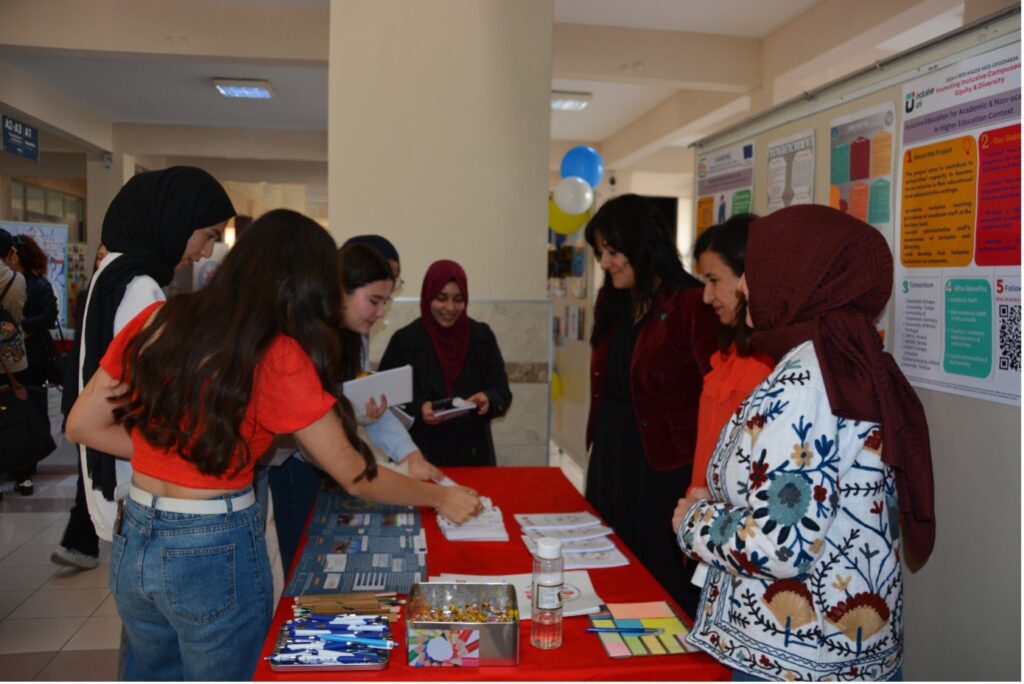
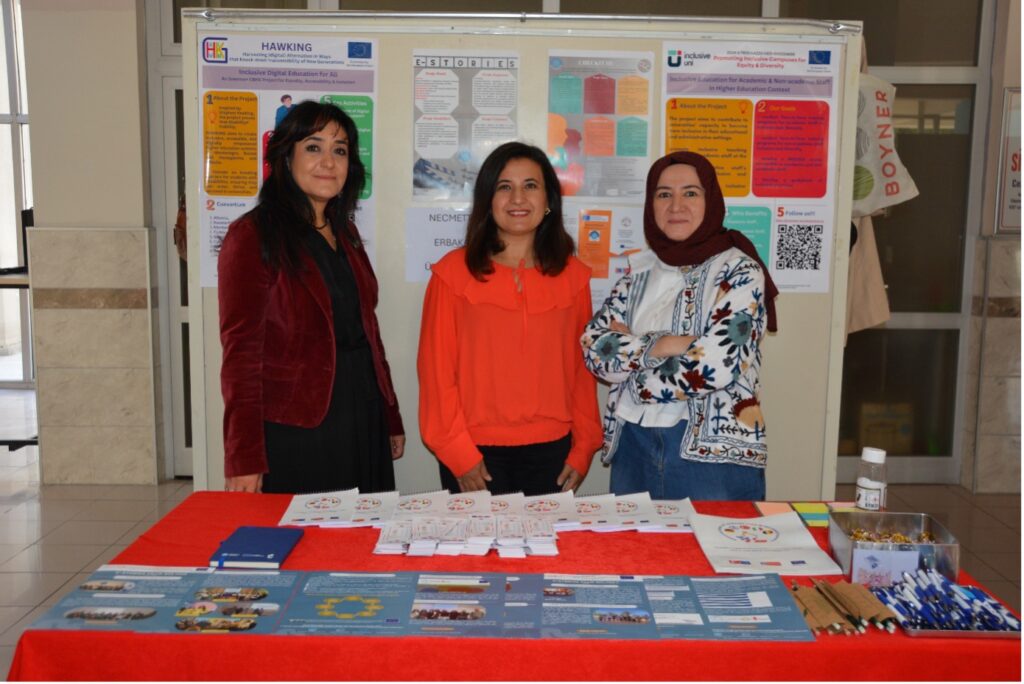
During the event, Erasmus projects implemented across Konya were showcased and disseminated through exhibitions, stands, and informational panels. Various EU-funded projects were welcomed by great interest from visitors. The NEU team members; Cemile Doğan, Şeyma Akın and Hayriye Ulaş Taraf, are happy to celebrate the spirit of collaboration, inclusion, and innovation Erasmus brings across Europe!
Uniwersytet Marii Curie-Sklodowskiej
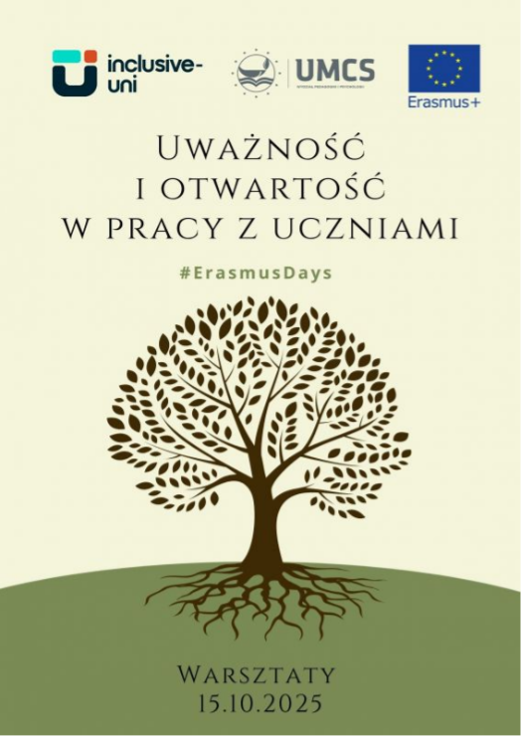
Faculty of Education and Psychology: Mindfulness and Openness in Working with Students – Building Relationships Based on Empathy and Understanding, 15 October 2025
During the workshop, participants were introduced to the basics of mindfulnes — understood as present-moment awareness: noticing thoughts, emotions and reactions without judgement. Framed within diversity and inclusion, the session showed how mindfulness supports culturally responsive, trauma-informed and accessible practice by helping teachers and facilitators recognise their own biases, attune to learners’ varied backgrounds and needs, build empathetic relationships, and cultivate classroom climates that foster collaboration, psychological safety and a genuine sense of belonging for all.
University of Minho
“Quarenta Minutos de Lições sobre o Ensino Superior Inclusivo”
(Forty Minutes of Lessons on Inclusive Higher Education)
Forty Minutes: Lessons on Inclusive Higher Education is organized under the scope of the project INCLUSIVE-UNI Promoting Inclusive Campuses for Equity and Diversity/ ERASMUS+ KA220-HED. It consists in a series of short, online conversations that create open, welcoming spaces to discuss Inclusion & Diversity in higher education. Each session invites active participation—from students, academics, non-academics, and the wider public—around concrete issues such as specific educational needs, gender equality, social inequality, integration, Universal Design for Learning, and everyday university practices.
The aim is twofold: i) to share and amplify effective practices, and ii) to raise public awareness of the barriers that still limit full inclusion and participation. Join us to listen, contribute, and help shape practical steps toward a more equitable university for all.
Program
Rosalina Veiga (24th October 2025 – 12h/ CET / Online)
Rosalina Veiga is a Special Education professor and collaborating researcher at the Communication and Society Research Centre. Her scholarship examines how educational systems and social policies shape the lives of people with disabilities, with particular attention to professional inclusion, independent living, self-determination, community participation, and quality of life. She works closely with schools, service providers, and advocacy groups to co-design evidence-based practices that remove barriers and expand participation. Her research advances inclusive pedagogies and transition-to-work pathways, while informing policies that promote autonomy and social justice.
Reference: https://www.cecs.uminho.pt/en/investigador/rosalina-veiga/
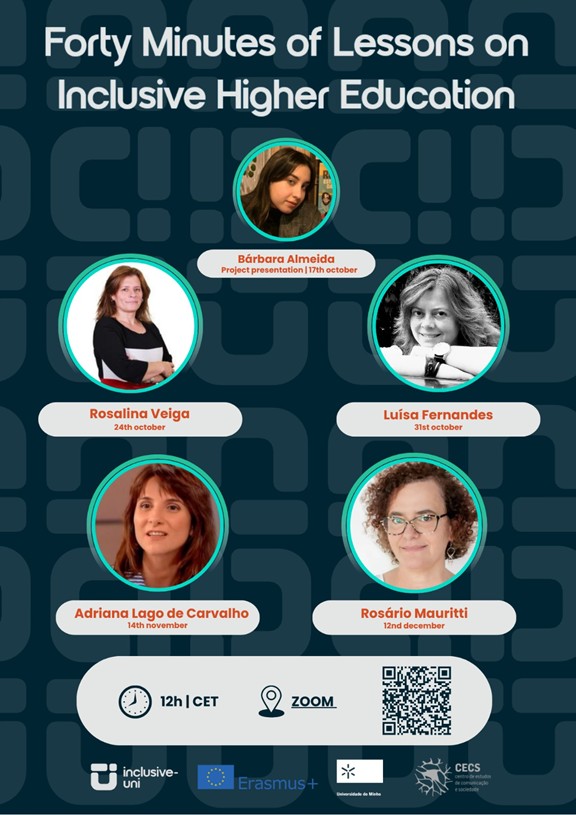
Luísa Fernandes (31st October 2025 – 12h/CET Online)
Luísa Fernandes is a Special Education professor with a PhD in Sociology and a collaborating researcher at the Communication and Society Research Centre. Her research explores how educational practices and social contexts shape the lives of people with disabilities, with emphasis on professional inclusion, independent living, self-determination, community participation, and quality of life. She works in collaboration with schools, service providers, and community organizations to co-develop evidence-informed strategies that remove barriers and expand participation. Her scholarship advances inclusive pedagogies and transitions to employment while informing policies that promote autonomy and full citizenship for people with disabilities.
Reference: https://www.cecs.uminho.pt/en/investigador/luisa-martins-fernandes/
Adriana Lago de Carvalho (17th November 2025 12h/CET)
Adriana Lago de Carvalho is the Head of the Gender Equality Commission at the University of Minho, where she coordinates policy development, monitoring, and initiatives to advance equity across the institution. Between 2001 and 2016, she served as Director of the International Relations Office, leading internationalization strategies, partnerships, and mobility programs. Drawing on this dual experience, she works at the intersection of global engagement and gender equality, promoting inclusive governance, evidence-informed decision-making, and sustainable institutional change.
Rosário Mauritti (12th December 2025/12h/CET)
Rosário Mauritti is sociologist and an associate professor at the University Institute of Lisbon (School of Sociology and Public Policy, Department of Sociology). Director of the Laboratory for Transversal Skills (LCT-ISCTE) and Chair of the Scientific Committee for Special Admission Procedures at ISCTE. Integrated researcher at CIES-ISCTE, where she co-coordinates the Research Group on Inequalities, Work, and Well-being focusing on the study of social inequalities, social classes, and living standards, delving into emerging issues such as the trajectories and roles of higher education students, adults living alone, and older people in ageing societies.
Reference: https://ciencia.iscte-iul.pt/authors/maria-do-rosario-murias-bessone-mauritti/cv
Paderborn University
Share your experiences, ideas, and suggestions with us!
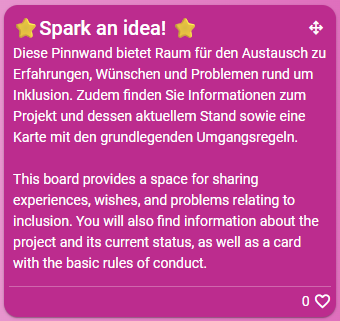
Whether you are personally affected, a relative, a teacher, or simply interested, we need your support in shaping the training program within the project and greatly appreciate your input. TaskCards allows you to share your experiences using digital moderation cards and help us improve our content. The Task cards board provides a space for sharing experiences, wishes, and problems relating to inclusion. You will also find information about the project and its current status, as well as a card with the basic rules of conduct.